Fatty Liver Grade 1, 2 & 3 Explained Simply: What Each Stage Means for Your Health (Chandigarh Guide)
Introduction
Fatty liver disease is becoming very common in Chandigarh and nearby areas like Mohali, Panchkula, Ambala, and Zirakpur. Many patients are surprised when their ultrasound report says “Fatty Liver Grade 1” or “Grade 2 Fatty Liver”, but they are not clearly told what it actually means.
Fatty liver is a condition where excess fat gets stored in the liver. If ignored, it can slowly damage the liver and lead to serious problems like liver inflammation, fibrosis, or even cirrhosis.
In this blog, Dr. Sandeep Pal, a trusted gastroenterologist and liver specialist in Chandigarh, explains fatty liver grades 1, 2, and 3 in very simple language so you can understand your condition and take the right action at the right time.
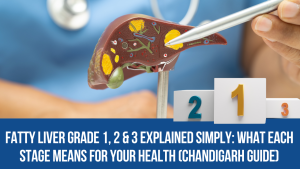
What Is Fatty Liver Disease?
Fatty liver disease happens when fat builds up inside liver cells. Normally, the liver contains a small amount of fat. But when fat increases beyond safe levels, the liver starts getting affected.
Fatty liver can occur due to:
- Unhealthy diet
- Obesity
- Diabetes
- Alcohol consumption
- Lack of physical activity
- High cholesterol
Many people in North India develop fatty liver because of sedentary lifestyle, late-night eating, oily food, and stress.
Types of Fatty Liver Disease
There are mainly two types:
1. Non-Alcoholic Fatty Liver Disease (NAFLD)
This occurs in people who drink little or no alcohol. It is commonly linked to:
- Obesity
- Diabetes
- High blood pressure
- Poor eating habits
2. Alcoholic Fatty Liver Disease
This happens due to regular or excessive alcohol intake. Over time, alcohol damages liver cells and causes fat accumulation.
Both types can progress through three grades.
Understanding Fatty Liver Grades
🔹 Fatty Liver Grade 1 (Mild Fatty Liver)
What it means:
This is the earliest stage. There is mild fat accumulation in the liver, but no major damage yet.
Common symptoms:
- Usually no symptoms
- Mild tiredness
- Occasional bloating
Is it serious?
Grade 1 is reversible with lifestyle changes.
What doctors recommend:
- Healthy diet
- Weight control
- Regular walking or exercise
- Limiting sugar and oily food
If detected early, Grade 1 fatty liver can be completely controlled.
🔸 Fatty Liver Grade 2 (Moderate Fatty Liver)
What it means:
Fat accumulation is higher and may start affecting liver function.
Common symptoms:
- Constant fatigue
- Mild pain or heaviness on the right side of the abdomen
- Indigestion
- Weight gain
Is it serious?
Yes, if ignored, Grade 2 can progress further.
Medical advice:
- Detailed liver blood tests
- Diet planning
- Strict control of diabetes or cholesterol
- Regular follow-up with a gastroenterologist
At this stage, lifestyle changes alone may not be enough. Medical supervision is important.
🔴 Fatty Liver Grade 3 (Severe Fatty Liver)
What it means:
This is the advanced stage where fat causes liver inflammation and damage.
Common symptoms:
- Persistent abdominal discomfort
- Weakness
- Swelling in abdomen or legs (in some cases)
- Loss of appetite
Is it dangerous?
Yes. Grade 3 fatty liver can lead to:
- Liver inflammation
- Liver fibrosis
- Cirrhosis
- Liver failure (in advanced cases)
Immediate medical care is necessary.
How Fatty Liver Is Diagnosed
Doctors usually diagnose fatty liver using:
- Ultrasound abdomen
- Liver function tests (SGOT, SGPT)
- Fibroscan (in selected cases)
- Blood tests to rule out hepatitis
Early diagnosis helps prevent complications.
Fatty Liver Treatment Approach in Chandigarh
Treatment depends on the grade and cause. There is no single medicine that cures fatty liver, but a combined approach works best.
✔ Diet correction
✔ Weight reduction
✔ Control of sugar and cholesterol
✔ Alcohol avoidance
✔ Regular monitoring
A personalized plan gives better results than random internet advice.
Why Early Treatment Matters
Many patients ignore fatty liver because it often has no symptoms in early stages. But liver damage happens silently. Timely care can:
- Reverse early fatty liver
- Prevent liver scarring
- Avoid future liver failure
When Should You See a Doctor?
You should consult a gastroenterologist if:
- Ultrasound shows fatty liver
- Liver enzymes are high
- You have diabetes or obesity
- You feel persistent fatigue or abdominal discomfort
Meet Dr. Sandeep Pal — Gastroenterologist in Chandigarh
Dr. Sandeep Pal is an experienced gastroenterologist providing expert care for fatty liver, liver diseases, and digestive problems.
📍 Clinic Address:
SCO 26, First Floor, Sector 33D, Sector 33, Chandigarh — 160020
📞 Appointment Number:
98777 06034
🌐 Website:
www.drsandeeppal.com
Patients from Chandigarh, Mohali, Panchkula, and nearby areas trust Dr. Sandeep Pal for accurate diagnosis and ethical treatment.
Frequently Asked Questions (FAQs)
1. Is fatty liver a serious disease?
It can become serious if ignored, especially in Grade 2 and Grade 3.
2. Can fatty liver be cured completely?
Early-stage fatty liver can be reversed with proper lifestyle changes.
3. Does fatty liver always cause pain?
No. Many people have fatty liver without pain.
4. Is fatty liver common in non-alcoholic people?
Yes, very common due to obesity and diabetes.
5. Can fatty liver turn into cirrhosis?
Yes, if untreated for many years.
6. How long does it take to improve fatty liver?
Improvement can be seen within 3–6 months with proper care.
7. Is walking good for fatty liver?
Yes, regular walking helps reduce liver fat.
8. Should alcohol be stopped completely?
Yes, alcohol should be avoided, especially in fatty liver.
9. Are medicines necessary for fatty liver?
Medicines may be needed depending on severity and blood test results.
10. Who is the right doctor for fatty liver treatment?
A gastroenterologist or liver specialist is best suited to manage fatty liver.
Final Note
Fatty liver is common but not harmless. Early awareness and correct medical guidance can save your liver and overall health.
If you or your family member has been diagnosed with fatty liver, consult Dr. Sandeep Pal, a trusted gastroenterologist in Chandigarh, for proper evaluation and treatment.
.jpg)

Comments
Post a Comment